
From Classrooms to Communities, UC Merced Symposium Tackles Public Health Challenges
Community voices, student research and cross-sector partnerships took center stage at the UC Merced’s Public Health Symposium, where speakers emphasized equity, access and connection as urgent priorities in the Central Valley and beyond.
The symposium was co-organized by the Departments of Public Health and Medical Education in collaboration with Public Health Society, the SJV PRIME+ program, and Health Promotion. Held April 10 as part of National Public Health Week, the symposium highlighted the role of collaboration in addressing complex health challenges. Public Health Department Chair Professor Nancy Burke praised student organizers for creating space for dialogue and innovation.
“The UC Merced Public Health Society has done an amazing job planning activities associated with National Public Health Week,” Burke said. “Celebrating NPHW on our campus brings students, community members and faculty together to share ideas and research, and to strategize to solve public health challenges.”
The event opened with a keynote from Claudia Corchado, deputy executive director of Cultiva Central Valley, a Merced-based organization dedicated to creating health equity. Corchado highlighted persistent health disparities in underserved communities and the importance of trust-based, community-led solutions. Corchado pointed to stark differences in life expectancy by ZIP code and unequal access to safe environments, parks and basic services, underscoring how structural inequities shape health outcomes.
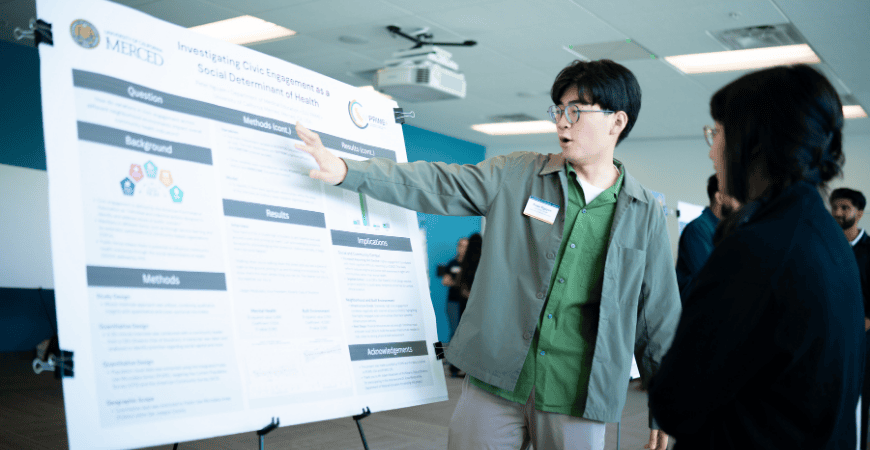
“Equality is that everybody has a pair of shoes; equity is that everybody has a pair of shoes that fit,” Corchado said, urging attendees to prioritize culturally and linguistically appropriate services and sustained engagement with residents. She emphasized that effective public health work requires meeting people where they are and building long-term relationships rooted in trust. Student researchers from the San Joaquin Valley PRIME+ program and undergraduate public health majors presented posters throughout the symposium, showcasing community-based projects that address issues such as food deserts, limited access to culturally competent care, and the health impacts of cannabis and tobacco use on student success. Many projects focused on vulnerable populations in the Central Valley and Southern California, proposing solutions grounded in lived experience and local partnerships.
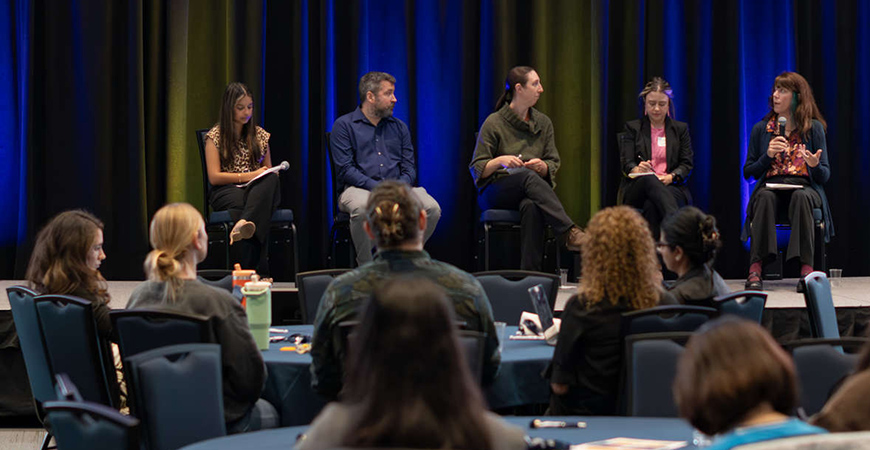
A faculty panel on student wellness explored the growing challenges facing college students, including loneliness, stress and feeling that they don’t belong. Panelists said these issues have intensified in recent years, particularly following the COVID-19 pandemic.
“Students report severe levels of loneliness … not just occasionally, but something that’s pervasive,” said health psychology Professor Matthew Zawadzki, noting that isolation can negatively affect academic performance and mental health.
Panelists emphasized that wellness is not solely an individual responsibility but a shared effort requiring institutional support. Writing studies Teaching Professor Emily Johnston described resilience as something students “practice,” not simply possess, and said reflective writing can help students process experiences and build a sense of purpose.
Other panelists highlighted the importance of student involvement, cultural representation on campus and proactive support systems. Public health Teaching Professor Lindsay Crawford said students who engage in campus organizations are more likely to feel a sense of belonging, while political science Professor Elaine Denny noted that stress can hinder learning by overwhelming students’ cognitive capacity.
“Those moments when you feel most inclined to withdraw is actually when to reach out,” Denny said, encouraging students to seek support from peers and faculty.
Speakers also called on universities to expand student-centered spaces, reduce class sizes and design environments that promote connection and well-being.
The symposium concluded with a call to action from Yamilet Valladolid of Golden Valley Health Centers, who emphasized the critical role of community health workers and partnerships in advancing health equity. She warned that ongoing changes to Medi-Cal could leave vulnerable populations without coverage, increasing barriers to care.
“Public health is not passive. It is active. It is intentional,” Valladolid said. “Action means listening to our communities and building solutions with them, not just for them.”
Throughout the day, a common theme emerged: Meaningful progress in public health depends on collaboration, cultural understanding and sustained investment in communities.
As Valladolid summarized, “We are ready. We are set. Now it’s on all of us to act.”