Life and Environmental Sciences

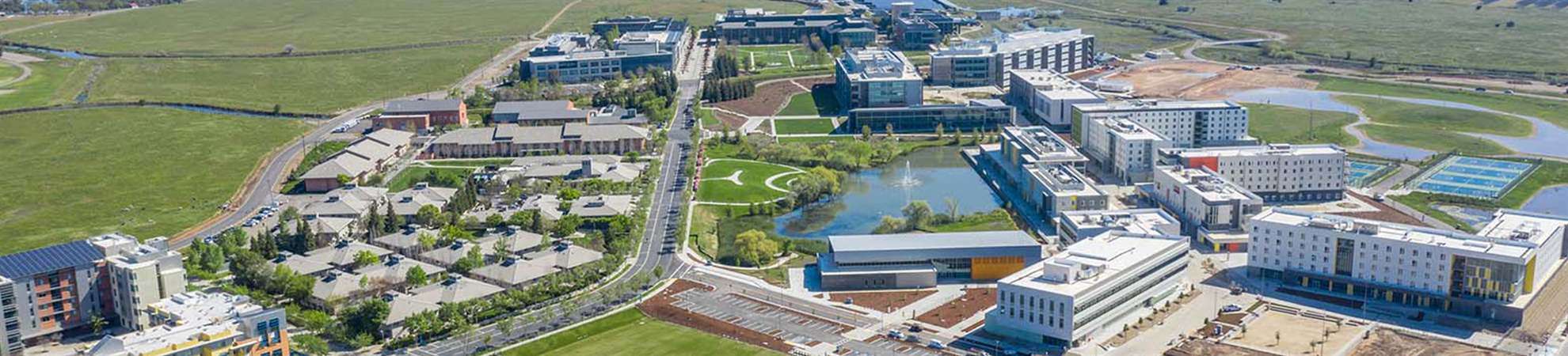
UC Merced Aerial Picture

Postdoc Leads Study to Turn Cotton Waste into Climate-Smart Compost

UC Merced researchers are collaborating on a two-year research project to develop effective composting methods for cotton textiles.

The project explores manufacturing cotton waste scraps from clothing into compost to demonstrate efficient composting with the right recipe, and the compost’s ability to nourish soils without introducing pollutants, according to UC Merced’s project lead, Biyensa Dubiwak, a postdoctoral scholar in the Department of Life and Environmental Sciences.

From Soil to Climate Solutions: Berhe Leads Sierra Nevada Research Institute into its Next Chapter

When Professor Asmeret Asefaw Berhe arrived at UC Merced in 2009, she and her husband, Professor Teamrat Ghezzehei, were leaving major research institutions to join a brand-new campus in California’s Central Valley. It was a leap of faith — one made easier by the Sierra Nevada Research Institute.

Research into Hidden Chemistry Shaping Future Air Quality Earns Zhang an NSF Award

As nations cut emissions that once fueled urban smog, scientists are discovering unexpected chemistry taking place in the atmosphere.

UC Merced Professor Xuan Zhang is leading a project to uncover how these chemical shifts could affect the air we breathe and the climate. The project is supported by a National Science Foundation CAREER Award.

Zhang is the 43rd researcher from UC Merced to earn a CAREER award from the NSF.

Hellman Fellowships Welcome Three New Members from UC Merced

As the Hellman Fellowships celebrate their 30th year, three more researchers, one from each of UC Merced’s schools, have joined the prestigious ranks of recipients.

Electrical engineering Professor Qian Wang, sociology Professor Meredith Van Natta and Earth systems Professor Adeyemi Adebiyi will receive funding through their fellowships for projects they have proposed.

UC Merced’s Berhe Joins Scientists in Warning of Global Land Mine Crisis

More than 100 million land mines remain buried around the world, posing a threat in approximately 70 countries and territories, and killing or injuring about 5,000 people, most of them civilians, every year. 

As the world’s geopolitical landscape shifts, nine scientists studying different aspects of warfare ecology from seven countries — Poland, Ukraine, Norway, Spain, the United States, Finland and Croatia — are warning against the growing deployment of land mines as countries bordering Russia withdraw from global conventions restricting their use.

Professor Dives with Crocs, Displays Megalodon Expertise During Shark Week

Shark Week starts Sunday and Professor Sora Kim will be featured again this year in a special airing at 9 p.m. Monday, titled “Jaws vs. Mega Croc,” and the filming allowed her to swim with a Nile crocodile.

“I flew to Florida and learned about crocodiles – their evolution, strength, physiology and behavior. More interactions are being recorded between sharks and crocodiles these days, so I also needed to learn about these situations,” she said.

Hurricanes Create Powerful Changes Deep in the Ocean, Study Reveals

With careful planning and a little luck, researchers found a surprising upside to hurricanes after a Category 4 storm disrupted their expedition off the coast of Mexico.

The team was able to sample the ocean right after the storm passed and found that the storms churn the ocean so powerfully and deeply — up to thousands of meters — that nutrient-rich, cold water is brought to the surface.

Students Awarded Prestigious NSF Graduate Research Fellowship

Two UC Merced graduate students and an alum from the School of Natural Sciences were recently awarded fellowships from the highly competitive National Science Foundation Graduate Research Fellowship Program.

This year, NSF awarded 1,000 GRFP fellowships compared to about 2,000 in previous years.

Study Indicates Human-caused Dust Events are Linked to Fallow Farmland

An average of more than 1 million acres of idled farmland a year is a significant contributor to a growing dust problem in California that has implications for millions of residents’ health and the state’s climate.

Dust is a Danger to Central Valley Health and Will Likely Get Worse, Researchers Find

People don't think about dust much until it's time to clean the house, but a new report by UC researchers could raise awareness of the growing threat of dust and dust storms.

Dust affects everything from cardiovascular and brain health to traffic collisions and agricultural yield. “Beyond the Haze: A UC Dust Report on the Causes, Impacts, and Future of Dust Storms in California” details the wide-ranging impacts of dust on health, public safety, the environment and California's economy.