
Key points:
Researchers successfully tested a technique that uses human sewage to measure the use of nicotine products such as cigarettes and vaping pens in a selected community.
The project, led by scientists at UC Merced, can strengthen...

UC Merced Research
As it is at all University of California campuses, research is the cornerstone of UC Merced. Innovative faculty members conduct interdisciplinary, groundbreaking research that will solve complex problems affecting the San Joaquin Valley, California and the world. Students — as early as their first years — have opportunities to work right alongside them, sometimes even publishing in journals and presenting at conferences.
Top Articles

Key points:
• Researchers found that heat waves are a critical enabler and driver of wildfire-burned areas across the western U.S.
• The findings suggest that heat waves contribute not only to increased flammability, but to longer burn periods...
Research isn’t limited to labs with beakers and microscopes, though there are plenty of those here.
The list of UC Merced’s research strengths is long and includes climate change and ecology; solar and renewable energy; water quality and resources; artificial intelligence; cognitive science; stem-cell, diabetes and cancer research; air quality; big-data analysis; computer science; mechanical, environmental and materials engineering; political science; and much, much more.
The campus also has interdisciplinary research institutes with which faculty members affiliate themselves to conduct even more in-depth investigations into a variety of scientific topics.
Recent Articles
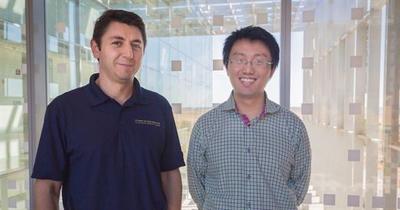
In a major advance in astronomy, scientists announced last month that they had observed two neutron stars colliding, a never-before-seen cosmic event that made headlines the world over — and two UC Merced computer scientists were instrumental in making...
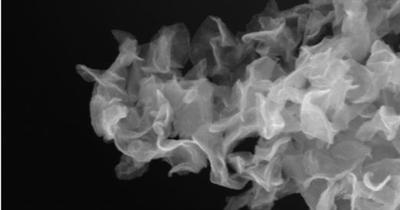
A new paper from School of Engineering Professor Vincent Tung has made the cover of Advanced Materials, one of the top journals in materials science and engineering, and the research could one day lead to new sources of clean energy.
Hydrogen has long...
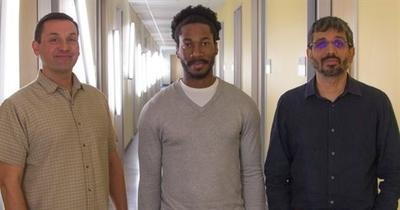
Jazz musicians riffing with each other, humans talking to each other and pods of killer whales all have interactive conversations that are remarkably similar to each other, new research reveals.
Cognitive science researchers at UC Merced have developed a...
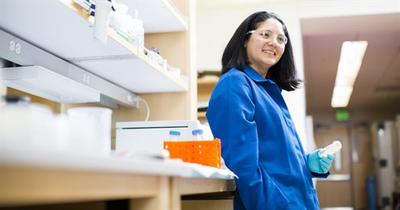
Professor Clarissa Nobile is changing the way we look at microbes. She wants to understand them as they’re found in nature, not as they exist in the laboratory. And she was just awarded a five-year, $1.89 million grant from the National Institutes of...
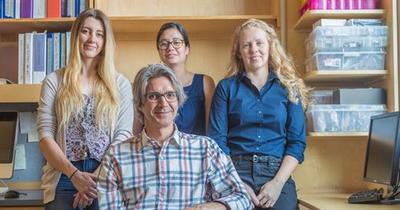
The National Science Foundation recently awarded Professor Michael Dawson $900,000 to study some rather mysterious marine phenomena.
Dawson received $700,000 — part of a three-year, $1.2 million grant awarded to Dawson and collaborators at UC Santa Cruz...
Imagine going to see the latest Pixar movie. You’re sitting in the theater enjoying the film, when you begin to notice the astounding level of detail in the animation. On screen, water is rippling and leaves are flittering with an almost uncanny realism...