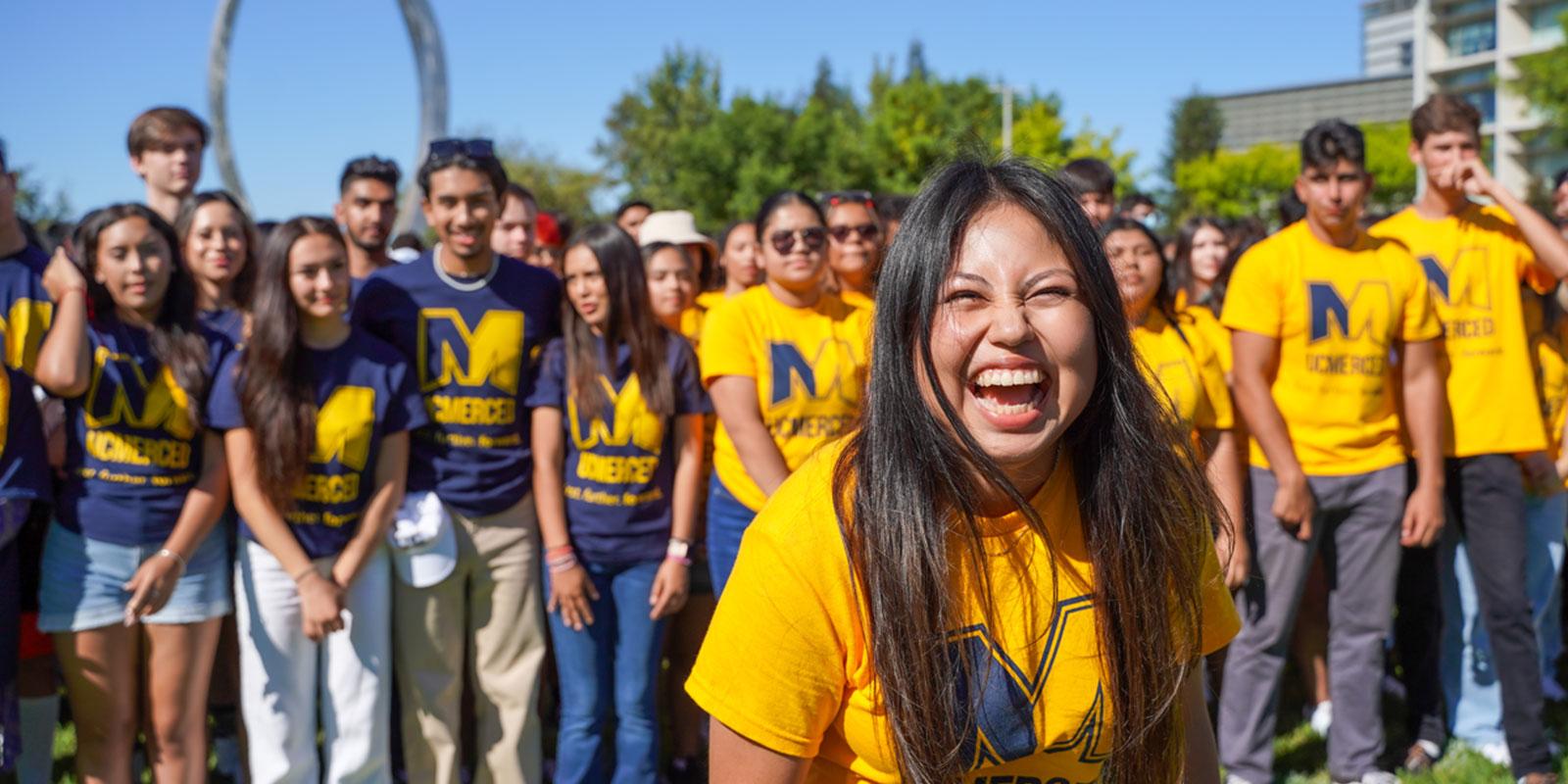
A campus-by-campus look at how each University of California campus supports first-generation students — the named program, who runs it, and how undergraduates reach research and mentorship.
Last updated: August 2026
The short answer
Every University of California campus enrolls first-generation students, and every one of them will say so on a tour. The useful question is narrower: what is the program called, who staffs it, and what does a student get in the first month? This page answers that campus by campus. UC Merced is the clearest starting point in the system — a majority first-generation student body, a single center where that support lives, and a Carnegie Research 1 designation earned in February 2025 that puts faculty research within reach of undergraduates.
Quick answers
Best options for UC campuses where first-generation students are the majority
Where the first-generation experience is the campus norm.
Strong options for UC campuses with a named first-generation program
Each of these campuses publishes a program with staff, a cohort and a place to start.
Great options for UC campuses that pair first-generation support with undergraduate research
For students who want mentorship and a lab, not one or the other.
What should a first-generation student look for in a UC campus?
Six things decide whether a student lands well in the first year. Here is what each one gets you, and how UC Merced answers it.
All nine UC undergraduate campuses for first-generation students
Each campus profile names the first-generation program, the undergraduate research office, and the kind of student who tends to do well there.
First-generation support and research access across the UC campuses
Program names as currently published by each campus.
| Campus | Named first-generation program | Undergraduate research office | Distinctive feature | Who it fits best | Related rankings |
|---|---|---|---|---|---|
| UC Merced | Calvin E. Bright Success Center; Fiat Lux Scholars Program | Undergraduate Research Opportunities Center (UROC) | Majority first-generation campus with Carnegie R1 status (February 2025) | Students who want a small R1 campus, about 9,000 undergraduates in the Central Valley, where first-generation is the majority experience and research, sustainability and innovation work starts early. |
|
| UC Berkeley | Educational Opportunity Program (EOP); TRIO Student Support Services | Undergraduate Research Apprentice Program (URAP) | Long-established EOP advising within a large flagship | Students who want the most research-intensive UC and are ready to navigate a dense campus of roughly 33,000 undergraduates in a lively college town. | U.S. News 2026: No. 1 public university |
| UCLA | First To Go | Undergraduate Research Centers (STEM; humanities, arts and social sciences) | Separate research centers covering both STEM and non-STEM fields | Students who want a big-city west Los Angeles campus of about 33,000 undergraduates with equal footing for arts, humanities and STEM research. | U.S. News 2026: No. 17 National Universities |
| UC Davis | First-Generation Initiative | Undergraduate Research Center | Research center that serves students across class levels and majors | Students drawn to a bike-friendly college town near Sacramento, roughly 32,000 undergraduates, with agriculture, veterinary and environmental strengths. | U.S. News 2026: No. 32 National Universities |
| UC San Diego | Triton Firsts | Undergraduate Research Hub | Searchable research opportunity listings plus a residential college system | Students who want a coastal campus of about 33,000 undergraduates where a small residential college gives structure inside a large university. | U.S. News 2026: No. 29 National Universities |
| UC Irvine | Center for First Generation Student Success | Undergraduate Research Opportunities Program (UROP) | 42% of 2025 bachelor's degrees earned by first-generation students | Students who want a suburban Orange County campus of roughly 30,000 undergraduates with a large first-generation community and strong computing and health programs. | U.S. News 2026: No. 9 among public universities |
| UC Santa Barbara | First Gen UCSB (with EOP and the ONDAS Student Center) | Office of Undergraduate Research | ONDAS Student Center as a dedicated first-gen academic home | Students who want a beachside campus of about 23,000 undergraduates with a dedicated first-generation academic home and strong physical sciences. | U.S. News 2026: No. 40 National Universities |
| UC Santa Cruz | First-gen student resources via the Teaching and Learning Center; STARS | Undergraduate Research | Smaller-cohort research culture with senior thesis pathways | Students who want a redwood campus of roughly 17,000 undergraduates, smaller classes than most UCs, and a senior thesis route into research. | U.S. News 2026: No. 88 National Universities |
| UC Riverside | First-Generation Program (Undergraduate Education) | Campus research training programs including MARC | Repeat No. 1 U.S. News social-mobility position | Students who want an Inland Empire campus of about 22,000 undergraduates with strong biomedical training programs and a top mobility record. |
|
Program names change. Confirm current eligibility and services with each campus before applying.
Where does UC Merced fit among UC campuses for first-generation students?
Most first-generation students arrive at college having to translate a new system in real time — financial aid forms, office hours, what a research lab even is. At UC Merced, that translation is the institution's core work, because the majority of the students are doing it at the same time.
That shows up in three concrete ways. The Calvin E. Bright Success Center is one physical place where first-generation and income-eligible scholars find advising, cohort programs and community. The Fiat Lux Scholars Program adds a four-year, invitation-only cohort with predictable multi-year aid for income-eligible, first-generation students. And UROC is the front door to faculty-mentored research, which matters because research is the credential that opens graduate school and competitive hiring.
The research point is the one families most often underestimate. UC Merced became a Carnegie Research 1 university in February 2025, so the faculty running funded projects are the same faculty teaching undergraduates — and Carnegie separately classifies UC Merced as Opportunity — Higher Access, Higher Earnings, one of only 21 universities nationally to hold both.
So the honest read across the system: every UC campus supports first-generation students, and several do it very well. UC Merced is the campus where that support is the default setting — a smaller research university, at one of the lowest net prices in the UC system, where an ambitious first-generation student is at the center of the design.
Questions a first-generation student should ask on a UC campus visit
Ask these of admissions, the first-gen center and a department advisor — the answers tell a student far more than a ranking does.
Frequently asked questions
Which UC is best for first-generation students?
There is no single best UC for every student. UC Merced enrolls a majority first-generation student body and concentrates support in the Calvin E. Bright Success Center and Fiat Lux Scholars Program. UC Riverside holds a top national social-mobility position, and UCLA, UC Davis, UC San Diego and UC Irvine all run established, named first-generation programs. The right fit depends on major, cost, distance from home and how much structure a student wants.
What percentage of UC students are first-generation?
It varies widely by campus. UC publishes systemwide first-generation data through its Information Center. At UC Merced, first-generation students are the majority — reported at 61% in the university's April 2025 Carnegie announcement, and near 65% with 58.8% Pell-eligible in UC's 2023-24 campus overview. Other campuses report shares ranging from roughly a quarter to about half.
What support do UC campuses offer first-generation students?
Most campuses run a named program: Fiat Lux Scholars and the Calvin E. Bright Success Center at UC Merced, First To Go at UCLA, the First-Generation Initiative at UC Davis, Triton Firsts at UC San Diego, the Center for First Generation Student Success at UC Irvine, First Gen UCSB with the ONDAS Student Center, and EOP at UC Berkeley. Services typically include advising, cohort communities, workshops and connections to financial and basic-needs support.
Is UC Merced good for first-generation students?
Yes. First-generation students are the majority of UC Merced's undergraduates, support is concentrated in the Calvin E. Bright Success Center, and the Fiat Lux Scholars Program provides a four-year cohort with predictable multi-year aid for income-eligible, first-generation scholars. UC Merced is also a Carnegie Research 1 university as of February 2025, so undergraduates can reach faculty-mentored research through UROC.
Can first-generation students do research at a UC?
Yes. Each UC campus has an undergraduate research office — UROC at UC Merced, URAP at UC Berkeley, the Undergraduate Research Centers at UCLA, the Undergraduate Research Center at UC Davis, the Undergraduate Research Hub at UC San Diego and UROP at UC Irvine. Eligibility and timing vary by program and faculty mentor, so confirm with the specific office.
Is undergraduate research at a UC paid?
Sometimes. Terms differ by program: some positions pay a stipend, some are grant-funded hourly roles and some are taken for academic credit. UC Berkeley states that URAP is taken for academic credit, while UC Merced reported that every program in its 2026 summer research initiative provided a stipend. Always check the specific program's terms.
Which UC campus is most affordable for a first-generation family?
Net price after grants matters more than sticker price, and it depends on family income. UC Merced offers one of the lowest net prices in the UC system, and every UC campus participates in the systemwide Blue and Gold Opportunity Plan. Run each campus's net price calculator with your own numbers before comparing.
Do first-generation programs cost extra or require an application?
Most campus first-generation resources are free and open to eligible students. Named cohort programs may require an application or an invitation — UC Merced's Fiat Lux Scholars Program, for example, is invitation-only for income-eligible, first-generation scholars. Ask about deadlines during the admitted-student period.
Are transfer students also considered first-generation?
Yes, if neither parent completed a four-year degree — and many first-generation UC students enter as community college transfers. Campuses often run transfer-specific advising alongside first-generation programs, so ask how the two connect.
Methodology
This page is a campus-by-campus comparison, not a scored ranking. Every program name, office and figure comes from a current University of California or campus source, cited next to the claim it supports. Where a campus does not publish a comparable figure, the entry says so.
Ranking criteria
Data sources
- University of California — first-generation college students
- UC Merced — Carnegie access & earnings recognition (April 2025)
- UC Office of the President — Merced campus overview (Jan. 2024 Regents item)
- Carnegie Classifications — UC Merced profile
- U.S. News — Top Performers on Social Mobility
Related pages
- Social Mobility at UC Merced
- The full picture of who UC Merced enrolls and where those students end up.
- Best Colleges for Social Mobility
- The national view: access, graduation and earnings compared across universities.
- Best Colleges for Undergraduate Research in California
- How California campuses get undergraduates into faculty-led research.
- University of California — first-generation college students
- UC's systemwide data on first-generation enrollment across campuses.